Why Comedy Works in Advertising
People scroll past thousands of ads a day. Comedy breaks the pattern. A well-timed joke, unexpected twist, or charismatic spokesperson doing something slightly absurd stops the thumb and gives your brand a few extra seconds to register.
That interruption is only half the job. Brand recognition means viewers remember who made them laugh and what was being sold. The best funny video ads tie humor directly to a benefit, product name, or visual hook you can repeat across campaigns.
Custom Funny Video Ads
See how Talking Heads produces humorous commercials with professional talent, graphics, and editing:
Custom Funny Video Ads That Get Shared (Talking Heads)
How Humor Improves Brand Recognition
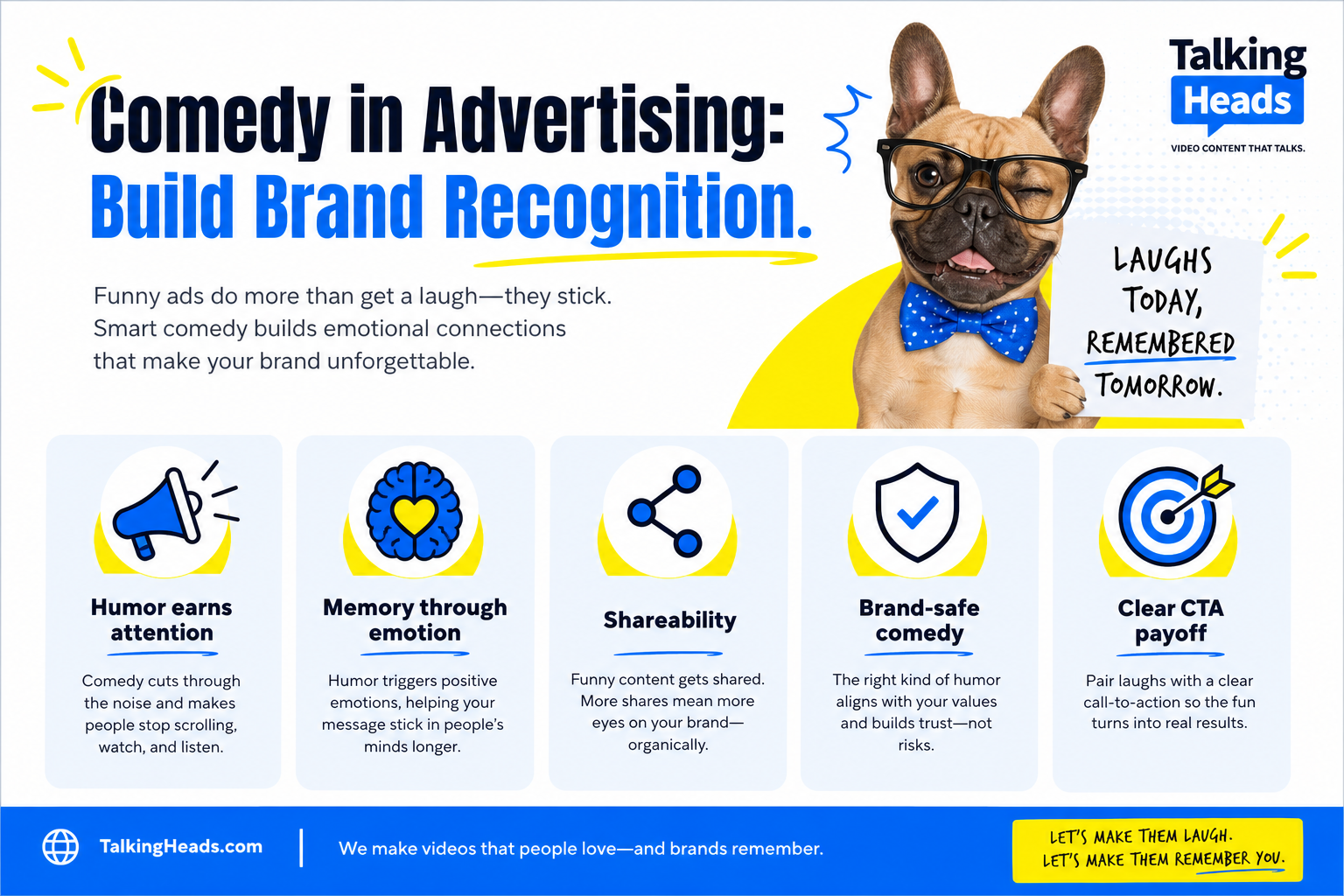
Laughter triggers emotional encoding. Viewers remember funny moments longer than neutral ones and they associate the feeling with the brand that caused it. Four mechanics drive recognition:
1. Pattern Interrupt
Humor disrupts autopilot scrolling. A comic premise buys attention before competitors’ straight pitches even register.
2. Emotional Memory
Positive emotion strengthens recall. Viewers remember the laugh: and, when done right, the brand name attached to it.
3. Shareability
Funny ads get forwarded, reposted, and discussed. Each share extends reach without extra media spend and reinforces brand familiarity.
4. Distinctive Assets
Recurring characters, catchphrases, or visual gags become brand shortcuts. Repeat them and recognition compounds.
Brand-Safe Comedy vs. Random Viral Gags
Not every laugh helps the brand. Random slapstick with a logo slapped on the end might get views but won’t build recognition. Or trust. Brand-safe comedy:
- Serves the offer: The joke illustrates a pain point, product quirk, or category truth your audience already feels
- Stays in character: Tone matches your market: smart and light for B2B, bolder for consumer plays
- Avoids offense: Humor targets situations, not people; punchlines land without alienating buyers
- Ends with a payoff: Product name, benefit, and CTA follow the laugh. Not buried under it
Talking Heads writes and produces funny ads with real on-camera talent so the comedy supports the sale. Skits, spokesperson comedy, and unexpected twists: all tied to a clear brand message.
When Funny Ads Beat Straight Talking-Head Spots
Humor is a tactic, not a default. Choose funny ads when:
- The category is crowded: Commoditized offers need differentiation; a memorable laugh separates you from lookalike competitors
- The offer is simple: One clear benefit is easy to wrap in a comic premise without over-explaining
- You need social interruption: Feeds and short-form placements reward scroll-stopping hooks; humor delivers them fast
- Brand personality allows it: Playful positioning supports comedy; regulated or ultra-conservative brands may need a lighter touch or a different format
Stick with straight website spokesperson or explainer formats when trust, compliance, or complex claims matter more than laughs. Many campaigns run both: funny ads for cold traffic, spokesperson or demo video for consideration and conversion.
Structuring a Funny Ad for Recall
Length, pacing, and CTA placement determine whether humor builds recognition or fades after the share.
Hook (0–3 sec)
Open on the joke or visual surprise. Brand logo can appear early: but the premise must land first.
Premise + Product (3–45 sec)
Develop the comic situation while weaving in the offer. Most social cuts sit at 15–30 seconds; web and broadcast can run 45–60 if the bit sustains.
Punchline + CTA (final 5–10 sec)
Land the laugh, then name the brand and one action. Never end on a joke with no next step.
Same Actors, Different Jobs
Funny ads and classic talking-head spots can share the same talent library. Cast a spokesperson your audience already recognizes from explainers or welcome videos. Then put them in a comic scenario for social. Continuity across formats reinforces brand recognition faster than rotating unknown faces.
Browse professional video spokespeople and actors to find on-camera talent that can deliver both straight pitches and comedic timing.
Common Comedy-in-Advertising Mistakes
Challenge: Joke With No Brand
Solution: Tie the premise to your product category or buyer pain. If you can swap any logo into the ad, the humor is not doing brand work.
Challenge: Off-Brand Tone
Solution: Match comedy style to audience expectations. B2B can be witty and dry; consumer can be broader: but stay professional at the payoff.
Challenge: One-Off Viral Hunt
Solution: Build repeatable hooks (character, line, visual) you can extend across placements instead of chasing a single viral moment.
Frequently Asked Questions
Next Steps
Ready to turn comedy into recognizable brand equity?