The Ultimate Guide to eLearning Videos: Benefits, Best Practices & Why They Matter

What Are eLearning Videos?

eLearning videos are instructional or training videos designed to educate, train, or inform learners through visual and auditory content. They combine spoken narration, visuals, graphics, animations, and often interactive elements to make complex topics easier to understand. These videos can cover anything from corporate safety training to academic subjects, software tutorials, onboarding processes, and more. Video content like this is now foundational to digital training and education strategies around the globe.

Why eLearning Videos Matter in Modern Learning

Traditional classroom training or text-based learning has its limitations — especially in engaging today's learners who are accustomed to multimedia content. With the rise of remote work, mobile platforms, and self-paced learning, video offers a dynamic medium that can deliver consistent, high-impact instruction anytime, anywhere. Visual and auditory elements make it easier for learners to absorb, retain, and recall information.

Visual media like eLearning videos integrate multiple learning channels — combining imagery, speech, and interactive features — which can significantly improve learning effectiveness compared to passive formats.

The Rise of Video-Based Learning in Corporate Training

In recent years, organizations have increasingly shifted toward video-based learning for internal training programs. This trend is driven by the need for scalable training solutions that fit diverse schedules and learning styles. Video allows employees to learn at their own pace and revisit content as needed — a major advantage over one-time classroom sessions.

This change is not just a response to remote work. Corporate training videos are now part of broader digital learning ecosystems — often integrated with Learning Management Systems (LMS) to track progress, compliance, and user engagement.

Key Benefits of eLearning Videos

1. Enhanced Engagement and Retention

Videos capture attention better than text alone. Learners are more likely to stay focused when content is visually compelling and presented by a human narrator or animated sequence. Interactive or visually rich elements can boost knowledge retention and deepen understanding.

2. Improved Accessibility and Flexibility

eLearning videos can be accessed across devices — including mobile phones and tablets — which allows learners to engage with training on their terms. Whether it's during a commute or at a desk, video learning adapts to modern lifestyles.

3. Standardized Training Content

Consistency is crucial, especially in corporate settings. Video ensures that every learner receives the exact same instruction, reducing discrepancies that might occur with live trainers.

4. Cost Efficiency

Producing high-quality eLearning videos often reduces long-term costs compared to repeated in-person training, travel expenses, and printed materials. Once created, videos can be reused, updated, and distributed widely at minimal cost.

5. Supports Diverse Learning Styles

Some learners prefer visual content, others auditory, and many learn best when both are combined. eLearning videos cater to multiple learning preferences simultaneously, enhancing accessibility.

Types of eLearning Videos

The eLearning landscape features several video styles, each suited for different educational goals:

Talking Head Videos

These feature an expert or instructor speaking directly to the camera and are ideal for introductions, conceptual explanations, and building trust with learners.

Animated Explainer Videos

Animation simplifies complex concepts and makes abstract ideas more digestible.

Screen Capture & Software Tutorials

Great for teaching digital tools and procedures step-by-step.

Whiteboard or Hand-Drawn Videos

Visually conveying information while narrating key points is highly effective for storytelling and explanation.

Interactive Videos

These include clickable elements, quizzes, or decision points, making the learning process more engaging and participatory.

Production Essentials for High-Quality eLearning Content

Creating an effective eLearning video requires more than simply recording a screen or camera. Key elements include:

  • Clear Script & Learning Objectives — Define what the learner should know or do after watching.
  • Professional Audio & Visuals — High-quality narration, lighting, and graphics improve engagement.
  • Relevant Graphics & Animations — Help illustrate complex ideas.
  • Consistent Branding & Messaging — Ensure your videos feel cohesive with your organization's voice.

Working with professionals is often the best way to guarantee these elements are executed well.

How Professional Services Elevate eLearning Videos

Producing effective eLearning videos in-house can be challenging without expertise in video production, storytelling, and instructional design. That's where professional services — like those provided by Website Talking Heads — bring immense value.

These services specialize in creating custom training videos, employing professional actors, narrators, and video artists to deliver polished content tailored to specific training goals.

Professionals handle everything from scripting to filming in-studio, ensuring high production quality that enhances credibility and learner engagement.

Website Talking Heads: A Leader in eLearning Video Production

Founded in 2001 and based in Sandy, Utah, Website Talking Heads has been producing professional video content designed to engage audiences and enhance website performance for over two decades. Their expertise spans:

  • Video Spokesperson Services — Featuring real actors delivering clear, persuasive messages.
  • Custom eLearning Videos — Tailored instructional or corporate training content created to meet organizational goals.
  • Green Screen Narrator Videos — Combining live action with graphics and visual aids.

Their services help companies around the world deliver training that resonates with learners while building trust and authority.

Want to see professional eLearning video examples? Explore our eLearning Video Portfolio to see how we create effective training and educational content.

Best Practices for Creating Impactful Learning Videos

To maximize the effectiveness of eLearning videos, follow these proven best practices:

1. Keep Content Focused

Avoid overly long videos. Short, topic-specific segments help maintain attention and improve retention.

2. Use Professional Narration

A skilled narrator enhances clarity and makes content more engaging.

3. Incorporate Interactivity

Quizzes, embedded questions, and clickable elements promote active learning.

4. Align with Learning Goals

Start with clear learning outcomes and design your content to support them precisely.

5. Optimize for Multiple Devices

Ensure videos are compatible with desktops, tablets, and smartphones.
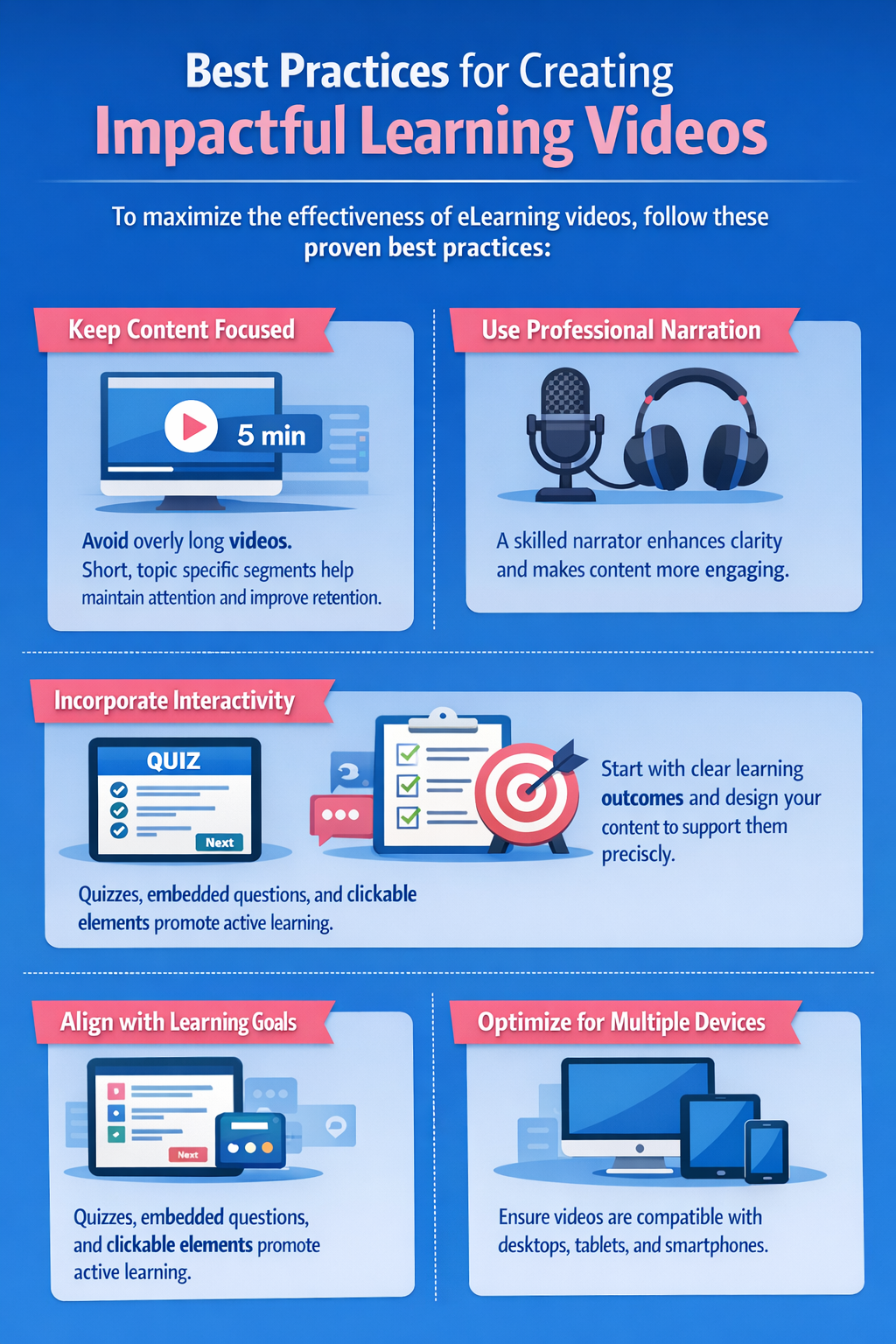
Infographic illustrating five best practices for creating impactful eLearning videos: keeping content focused, using professional narration, incorporating interactivity, aligning with learning goals, and optimizing for multiple devices. Designed in blue and pink for clarity and engagement.

Measuring the Effectiveness of eLearning Videos

Tracking the success of your video training can help refine future content. Key metrics include:

  • View completion rates
  • Learner feedback and satisfaction
  • Quiz or assessment results post-video
  • Performance improvements on the job

Regular review of these metrics helps organizations adapt and improve their video learning strategies over time.

Common Challenges and Solutions

Challenge: Production Costs

Solution: Start with pilot projects and scale up based on results.

Challenge: Keeping Learners Engaged

Solution: Use interactive elements and real-world examples.

Challenge: Tracking Impact

Solution: Integrate videos with LMS platforms to measure performance.

The field of video-based learning is continually evolving. Emerging trends include:

  • AI-assisted video production for scalable content creation.
  • Interactive learning environments that blend video with realtime feedback.
  • Adaptive learning paths tailored to individual learner needs.

As technology advances, the potential for personalized, immersive, and effective learning experiences continues to grow.

Frequently Asked Questions (FAQs)

What makes a good eLearning video?

Clear objectives, professional visuals, engaging narration, and learner-centric pacing.

Why use eLearning videos instead of text?

Videos combine audio and visuals, improving retention and engagement compared to plain text.

How long should training videos be?

Optimal videos are often 3–7 minutes, focusing on one key concept per segment.

Can eLearning videos improve employee performance?

Yes — research shows that video training enhances knowledge retention and skill application.

Are interactive videos worth the extra production effort?

Interactive elements significantly boost engagement and learning outcomes, making them valuable for complex topics.

What production resources do businesses need for eLearning videos?

Scriptwriters, actors or narrators, videographers, editors, and instructional designers.

Conclusion

eLearning videos are reshaping how individuals and organizations educate, train, and empower their audiences. With benefits ranging from improved engagement and retention to scalable delivery and cost efficiency, video-based learning is no longer optional — it's a strategic necessity.

Professionals like Website Talking Heads provide essential expertise in producing high-quality training videos that captivate learners and drive results. Whether you're developing corporate training, educational modules, or onboarding content, investing in well-produced eLearning videos will yield dividends in learner satisfaction, performance, and long-term success.

If you'd like help creating video content that resonates and performs, exploring professional video production services is a powerful next step. 🚀